Buy linux-fans.com ?
We are moving the project
linux-fans.com .
Are you interested in purchasing the domain
linux-fans.com ?
domain@kv-gmbh.de · 0541-91531010
Buy linux-fans.com ?
What is the Japanese conjugation of the verb "to be"?
The Japanese verb "to be" has two forms: "です" (desu) and "だ" (da). "です" is used in polite or formal speech, while "だ" is used in casual speech. In the present tense, "です" does not change, but "だ" becomes "です" in the present tense to show politeness. In the past tense, "です" becomes "でした" (deshita) and "だ" becomes "だった" (datta). **
Can you please give me the Spanish verb conjugation table?
Sure! The Spanish verb conjugation table is a chart that shows the different forms of a verb based on the subject and tense. It includes the different forms for each subject pronoun (yo, tú, él/ella/usted, nosotros/as, vosotros/as, ellos/ellas/ustedes) and for each tense (present, preterite, imperfect, future, conditional, etc.). It's a helpful tool for learning and practicing verb conjugations in Spanish. **


Similar search terms for Verb conjugation
Top-Angebote
Products related to Verb conjugation:
-
Graco Verb Click Connect Travel System - MerrickThe Graco Verb Travel System gives you a stylish and smooth ride for your child. It includes a SnugRide Lite Infant Car Seat (for baby from 4-30 lb), which connects to the stroller with a secure, one-second attachment. The lightweight stroller has...249,99 $*Shipping: 0,00 $Secure redirect to the provider
-
Graco Verb Click Connect 30 Travel System - TangerineThe Graco Verb Click Connect Stroller gives you a stylish and smooth ride for your child. This lightweight stroller features Click Connect technology to accept all top-rated SnugRide Click Connect infant car seats with a secure, one--second...179,99 $*Shipping: 0,00 $Secure redirect to the provider
-
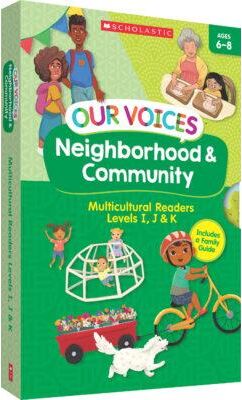
Our Voices: Neighborhood & Community Boxed SetFoster a feeling of belonging while building key reading skills with these colorful storybooks that spotlight a variety of neighborhoods and communities. The 10 charming stories feature characters from different cultural backgrounds who learn about...30,59 $*Shipping: 0,00 $Secure redirect to the provider
-
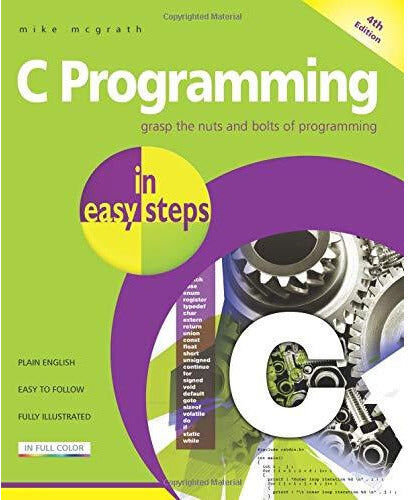
In Easy Steps Limited C Programming In Easy Steps 4th EditionC Programming in easy steps has an easy-to-follow style that will appeal to anyone who wants to begin programming in C, from programmers moving from another programming language, to the student who is studying C programming at school or college, or to those seeking a career in computing who need a fundamental understanding of procedural programming. C Programming in easy steps begins by explaining how to download and install a free C compiler so that you can quickly begin to create your own executable programs by copying the book's examples. You need have no previous knowledge of any programming language so it's ideal for the newcomer to computer programming. Each chapter builds your knowledge of C. C Programming in easy steps contains separate chapters on the major features of the C language. There are complete example programs that demonstrate each aspect of C together with screenshots that illustrate the output when that program has been executed. The sample code provided all has colored syntax-highlighting for clearer understanding. By the end of this book you will have gained a sound understanding of the C language and be able to write your own C programs and compile them into executable files that can be run on any compatible computer. Fully updated and revised since the third edition, which was published in April 2009.5,49 £*Shipping: 2,99 £Secure redirect to the provider


-
What is the conjugation of the verb levantarse in Spanish?
The verb "levantarse" is conjugated as follows: - Yo me levanto (I get up) - Tú te levantas (You get up) - Él/Ella/Usted se levanta (He/She/You formal get up) - Nosotros/Nosotras nos levantamos (We get up) - Vosotros/Vosotras os levantáis (You all get up - informal) - Ellos/Ellas/Ustedes se levantan (They/You all get up - formal) **
-
How can I determine in Latin to which conjugation a verb belongs?
To determine the conjugation of a Latin verb, you need to look at the infinitive form of the verb. The conjugation of a verb is determined by the ending of its infinitive form. - Verbs ending in -are belong to the first conjugation. - Verbs ending in -ere belong to the second conjugation. - Verbs ending in -ere (with a long e sound) belong to the third conjugation. - Verbs ending in -ire belong to the fourth conjugation. By identifying the infinitive form of a verb and recognizing its ending, you can easily determine to which conjugation it belongs. **
-
How can one recognize in Latin which conjugation a verb belongs to?
In Latin, one can recognize which conjugation a verb belongs to by looking at the infinitive form of the verb. The infinitive form of a verb in Latin ends in either -are, -ere, or -ire. Verbs ending in -are belong to the first conjugation, verbs ending in -ere belong to the second conjugation, and verbs ending in -ire belong to the third conjugation. There are also irregular verbs that do not follow these patterns, but for the majority of verbs, the infinitive form will indicate which conjugation they belong to. **
-
How can I find out in Latin to which conjugation a verb belongs?
To determine the conjugation of a verb in Latin, you can look at the infinitive form of the verb. Verbs ending in -are belong to the first conjugation, verbs ending in -ēre belong to the second conjugation, and verbs ending in -ere belong to the third conjugation. There are also irregular verbs that do not follow these patterns, so it is important to consult a Latin dictionary or grammar resource for those cases. **

What is the correct conjugation of the verb "setzen" in the 2nd person singular present tense?
The correct conjugation of the verb "setzen" in the 2nd person singular present tense is "du setzt." **
What is the correct conjugation of the Latin verb reverti in the forms revertor, reverti, and reversus?
The correct conjugation of the Latin verb reverti in the forms revertor, reverti, and reversus is as follows: 1. First person singular present indicative: revertor 2. Infinitive: reverti 3. Perfect participle: reversus **
Top-Angebote
Products related to Verb conjugation:
-
Graco Verb Click Connect Stroller - WinfieldThe Graco Verb Stroller gives you a stylish and smooth ride for your child. It features Click Connect technology to accept all top-rated SnugRide Click Connect infant car seats with a secure, one-second attachment and an audible click for peace of...129,99 $*Shipping: 0,00 $Secure redirect to the provider
-
Graco Verb Click Connect Travel System - GrooveThe Graco? Verb? Click Connect? Travel System gives you a stylish and smooth ride for your child. It includes a top-rated SnugRide? Click Connect? 30 Infant Car Seat (for baby from 4-30 lbs.), which connects to the stroller with a secure, one-second...149,99 $*Shipping: 0,00 $Secure redirect to the provider
-
Graco Verb Click Connect Travel System - MerrickThe Graco Verb Travel System gives you a stylish and smooth ride for your child. It includes a SnugRide Lite Infant Car Seat (for baby from 4-30 lb), which connects to the stroller with a secure, one-second attachment. The lightweight stroller has...249,99 $*Shipping: 0,00 $Secure redirect to the provider
-
Graco Verb Click Connect 30 Travel System - TangerineThe Graco Verb Click Connect Stroller gives you a stylish and smooth ride for your child. This lightweight stroller features Click Connect technology to accept all top-rated SnugRide Click Connect infant car seats with a secure, one--second...179,99 $*Shipping: 0,00 $Secure redirect to the provider
-
What is the Japanese conjugation of the verb "to be"?
The Japanese verb "to be" has two forms: "です" (desu) and "だ" (da). "です" is used in polite or formal speech, while "だ" is used in casual speech. In the present tense, "です" does not change, but "だ" becomes "です" in the present tense to show politeness. In the past tense, "です" becomes "でした" (deshita) and "だ" becomes "だった" (datta). **
-
Can you please give me the Spanish verb conjugation table?
Sure! The Spanish verb conjugation table is a chart that shows the different forms of a verb based on the subject and tense. It includes the different forms for each subject pronoun (yo, tú, él/ella/usted, nosotros/as, vosotros/as, ellos/ellas/ustedes) and for each tense (present, preterite, imperfect, future, conditional, etc.). It's a helpful tool for learning and practicing verb conjugations in Spanish. **
-
What is the conjugation of the verb levantarse in Spanish?
The verb "levantarse" is conjugated as follows: - Yo me levanto (I get up) - Tú te levantas (You get up) - Él/Ella/Usted se levanta (He/She/You formal get up) - Nosotros/Nosotras nos levantamos (We get up) - Vosotros/Vosotras os levantáis (You all get up - informal) - Ellos/Ellas/Ustedes se levantan (They/You all get up - formal) **
-
How can I determine in Latin to which conjugation a verb belongs?
To determine the conjugation of a Latin verb, you need to look at the infinitive form of the verb. The conjugation of a verb is determined by the ending of its infinitive form. - Verbs ending in -are belong to the first conjugation. - Verbs ending in -ere belong to the second conjugation. - Verbs ending in -ere (with a long e sound) belong to the third conjugation. - Verbs ending in -ire belong to the fourth conjugation. By identifying the infinitive form of a verb and recognizing its ending, you can easily determine to which conjugation it belongs. **
Similar search terms for Verb conjugation
-
Our Voices: Neighborhood & Community Boxed SetFoster a feeling of belonging while building key reading skills with these colorful storybooks that spotlight a variety of neighborhoods and communities. The 10 charming stories feature characters from different cultural backgrounds who learn about...30,59 $*Shipping: 0,00 $Secure redirect to the provider
-
In Easy Steps Limited C Programming In Easy Steps 4th EditionC Programming in easy steps has an easy-to-follow style that will appeal to anyone who wants to begin programming in C, from programmers moving from another programming language, to the student who is studying C programming at school or college, or to those seeking a career in computing who need a fundamental understanding of procedural programming. C Programming in easy steps begins by explaining how to download and install a free C compiler so that you can quickly begin to create your own executable programs by copying the book's examples. You need have no previous knowledge of any programming language so it's ideal for the newcomer to computer programming. Each chapter builds your knowledge of C. C Programming in easy steps contains separate chapters on the major features of the C language. There are complete example programs that demonstrate each aspect of C together with screenshots that illustrate the output when that program has been executed. The sample code provided all has colored syntax-highlighting for clearer understanding. By the end of this book you will have gained a sound understanding of the C language and be able to write your own C programs and compile them into executable files that can be run on any compatible computer. Fully updated and revised since the third edition, which was published in April 2009.5,49 £*Shipping: 2,99 £Secure redirect to the provider
-
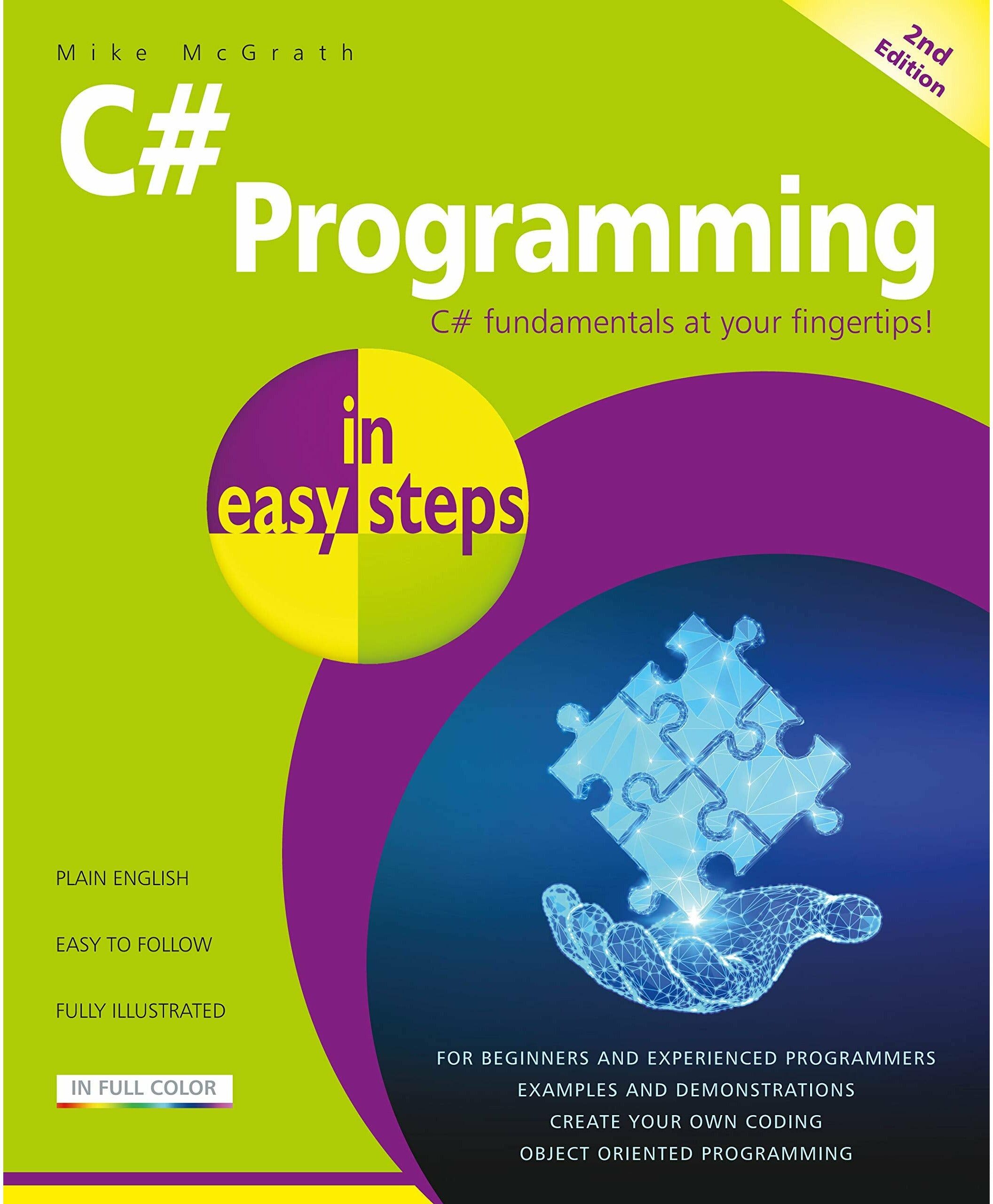
In Easy Steps Limited C# Programming in easy steps, 2nd edition by Mike McGrathC# Programming in easy steps, 2nd edition will teach you to code applications, and demonstrates every aspect of the C# language you will need to produce professional programming results. Its examples provide clear syntax-highlighted code showing C# language basics including variables, arrays, logic, looping, methods, and classes. C# Programming in easy steps, 2nd edition begins by explaining how to install the free Visual Studio Community Edition, to create an environment in which you can quickly begin to create your own executable programs by copying the book's examples. It demonstrates all the C# language basics before moving on to provide examples of Object Oriented Programming. The book concludes by demonstrating how you can use your acquired knowledge to create graphic programs for traditional PC Desktop apps, and also as Universal apps for multiple devices. C# Programming in easy steps, 2nd edition has an easy-to-follow style that will appeal to: Anyone who wants to begin programming in C# The programmer who quickly wants to add C# to their skills set The hobbyist who wants to begin creating apps for their own computer The student, and to those seeking a career in computing, who need a fundamental understanding of C# programming Table of contents: Getting started Storing values Performing operations Making statements Devising methods Handling strings Accessing files Solving problems Creating objects Controlling events Building an application Targeting devices4,98 £*Shipping: 1,99 £Secure redirect to the provider
-
Graco Verb Click Connect Travel System - TurnerThe Graco? Verb? Click Connect? Travel System gives you a stylish and smooth ride for your child. It includes a top-rated SnugRide? Click Connect? 30 Infant Car Seat (for baby from 4-30 lbs.), which connects to the stroller with a secure, one-second...149,99 $*Shipping: 0,00 $Secure redirect to the provider
-
How can one recognize in Latin which conjugation a verb belongs to?
In Latin, one can recognize which conjugation a verb belongs to by looking at the infinitive form of the verb. The infinitive form of a verb in Latin ends in either -are, -ere, or -ire. Verbs ending in -are belong to the first conjugation, verbs ending in -ere belong to the second conjugation, and verbs ending in -ire belong to the third conjugation. There are also irregular verbs that do not follow these patterns, but for the majority of verbs, the infinitive form will indicate which conjugation they belong to. **
-
How can I find out in Latin to which conjugation a verb belongs?
To determine the conjugation of a verb in Latin, you can look at the infinitive form of the verb. Verbs ending in -are belong to the first conjugation, verbs ending in -ēre belong to the second conjugation, and verbs ending in -ere belong to the third conjugation. There are also irregular verbs that do not follow these patterns, so it is important to consult a Latin dictionary or grammar resource for those cases. **
-
What is the correct conjugation of the verb "setzen" in the 2nd person singular present tense?
The correct conjugation of the verb "setzen" in the 2nd person singular present tense is "du setzt." **
-
What is the correct conjugation of the Latin verb reverti in the forms revertor, reverti, and reversus?
The correct conjugation of the Latin verb reverti in the forms revertor, reverti, and reversus is as follows: 1. First person singular present indicative: revertor 2. Infinitive: reverti 3. Perfect participle: reversus **
* All prices are inclusive of VAT and, if applicable, plus shipping costs. The offer information is based on the details provided by the respective shop and is updated through automated processes. Real-time updates do not occur, so deviations can occur in individual cases. ** Note: Parts of this content were created by AI.